Friday, December 10, 2021

Difference between internal and external indicator

The major difference between internal and external indicators is that the internal indicators are indicators in which one of the reactants acts as an indicator, whereas an external indicator is a type of indicator that is added externally and does not exist in the reactants.

Compounds that change color when exposed to acidic or alkaline solutions are known as indicators. Colored indicators are widely used to detect pH and can be added to the reaction mixture to determine the titration's endpoint or equivalence point. Although they can all be used to detect pH, they are not all suitable for the same application.

Hence the different types of indicators such as universal indicator, blue or red litmus paper, pH paper (pH 0.0 - 14), phenolphthalein (pH 8.2 - 10.0), methyl orange (pH 3.2-4.4), and bromothymol blue (pH 6.0-7.6), thymol blue (pH 8.0 - 9.6), etc. are used according to the pH range of the analyte.


Indicators are classified based on how they behave when they react with acids and bases. They are classified into three categories: internal indicator, external indicator, and a self indicator which are discussed below.

What is an internal indicator?

In chemistry, an internal indicator refers to the indicator that acts as a reactant in the reaction. These are the indicators that take part in the reaction of the titration and change the color of the solution after the titration is completed, showing the sharp endpoint. Internal indicators are commonly employed in redox titrations.

What is the example of internal indicator?

Potassium permanganate is an example of an internal and self indicator that is generally used in redox titrations. KMnO4 is a potent and adaptable oxidant that can be used to detect a wide range of compounds by obvious or indirect titration.


What is an external indicator?

In chemistry, external indicators are those that are added externally to a chemical process that does not act as reactants. The indicators are usually colorless, but as the pH changes, they become colored. As the solution approaches the endpoint, the color change occurs. These types are avoided as they reduce the volume of the reaction mixture. In acid-base titrations, they are used as an indicator to detect pH changes.

What is the example of external indicator?

Methyl orange, phenolphthalein, and potassium ferricyanide are examples of external indicators. In acid-base titrations, phenolphthalein is often used as a pH indicator. It becomes colorless in acidic solutions and pink in basic solutions.

What is a self indicator?

Self indicators are not indicators; they are simply reactive species of titration (titrant or titrand) that act as indicators by changing the color of the sample solution itself and indicating the endpoint. The only indicator that participates in a chemical reaction is the internal indicator. After the titration is completed, the color of the solution becomes translucent; however adding one more drop of KMnO4 changes the color to light pink, marking the titration's endpoint.

What is external internal and self indicator?

An external indicator is one that is added during the titration process by taking a drop of the titration mixture externally and detecting the change in pH. e.g. phenolphthalein used in acid-base titrations. The self indicator is the only reactive species of the titration that acts as an indicator by changing the color of the sample solution and indicating the endpoint. E.g. potassium permanganate works as a self-indicator.

Diphenylamine is which type of indicator?

Diphenylamine is used as an internal indicator to estimate the strength of given Mohr’s salt solution by titrating against potassium dichromate solution. Because it shows a clear color change from green to violet when the endpoint of the titration is reached, diphenylamine is used as an indicator.


Thursday, December 9, 2021

Different types of capsules

Capsules come in two types, hard gelatin capsules, and soft gelatin capsules, depending on the physical state of the drug to be filled. They are of different sizes and shapes and contain a single or more than one active ingredient.

Different types of routes and dosage forms are used to diagnose various diseases. Dosage forms are methods of delivering medication within the body to obtain the best possible benefit with the least possible adverse effects.

The different types of dosage forms are available such as solid, semisolid, gaseous, and liquid dosage forms but the oral-solid dosage form is one of the most used. They provide significant applications and advantages and can be in the form of powders, sachets, granules, tablets, and capsules. They are intended for oral administration.


What is capsule in pharmacy?

The capsule is a solid dosage form of medication in which one or more active pharmaceutical ingredients (API) and the excipients are enclosed in either a hard or soft soluble gelatin container. It is divided into solid drugs and liquid drugs depending on the physical state of the drug to be filled.Generally, the manufacturing process of capsules involves weighing, preparing ingredients, mixing, filling into capsules, and packing, etc.

Gelatin capsules often referred to as gel caps, are made from gelatin derived from the collagen of animal skin or bone. Cellulose, a significant structural component in plants, is used to make vegetable capsules, which were first introduced in 1989. Gelatin capsules are more widely used than vegetarian capsules in the current market due to the cheaper production cost.

Example: Hydroxypropyl methylcellulose (HPMC) is the key constituent in vegetarian capsules.


Definition of a capsule in industrial pharmacy:

According to the United States Pharmacopeia capsule is defined as solid dosage forms in which the active ingredients are encapsulated in a hard or soft container or shell.

Types of capsules with examples:

According to the raw material used in the formulation, the capsule can also be divided into a hard gelatin capsule, soft gelatin capsule, HPMC capsule, pullulan capsule, starch capsule, enteric capsules, metallic capsules, etc.

Two types of gelatin are used to prepare different types of capsules, type-A gelatin, and type-B gelatin.
Type-A gelatin: It is produced from acid hydrolysis and shows an isoelectric point in the region of pH 7.00 and 09.00.
Type-B gelatin: Type-B gelatin is derived from alkali hydrolysis; it exhibits an isoelectric point in the region of pH 4.7 and 5.4.

Hard-shelled capsules:

A hard gelatin capsule (Two-piece gel encapsulation) is a type of capsule which is commonly used to contain medicine in the form of dry powder or granules. It consists of two parts, one is the body and the other is the cap of the capsule (prefabricated, cylindrical sections), each of which has one rounded, closed-end, and one open end.

The hard gelatin capsules dry in nature may be colorless or may be available in different colors as needed. It provides great versatility for multi-particulate administration and the combination of various drugs within the same solid dosage unit. Hard gelatin shell is made of titanium dioxide, plasticizer as well as coloring agents.

Soft-shelled capsules:

Soft gelatin capsule (Single-piece gel encapsulation) is a type of capsule also called soft gel or soft elastic capsules, which are sealed one-piece containing a liquid or a semisolid fill without a bubble of air or gas. In the oil-based solution, the drug or medicine is dissolved and when the capsule is swallowed, it dissolves within the body, releases the drug into the stomach.

The shell of the soft gel capsule is composed of sugars, opacifying agents, plasticizers, water, preservatives gelatin, gelatin, sugars, coloring agents, and a plasticizer such as glycerin and/or sorbitol(s). Soft gel capsules come in a range of shapes and sizes, including cylindrical (0.15–25 ml), pear-shaped (0.3–5 ml), spherical (0.05–5 ml), ovoid (0.05–7 ml), and tubes (0.3–5 ml).

HPMC capsules:

Hydroxypropyl methylcellulose (HPMC) is a kind of cellulose known as hypromellose which is obtained by the hydrolysis of plants and is made by etherification. HPMC capsules are composed of HPMC and purified water and come in sizes ranging from 00 to 4. HPMC is better for moisture-sensitive products, hygroscopic materials, and low relative-humidity applications than hard gelatin.

Since it is not of animal origin, it has been used as dietary supplements, nutraceuticals, and herbal products in the food and pharmacy industries all over the world, and it is listed in the world's official pharmacopeia.

Pullulan capsule:

Tapioca is naturally fermented into pullulan, which is used to make these vegetarian capsules. Pullulan is a mature food additive that is a water-soluble mucopolysaccharide. Pullulan and purified water are the major ingredients in the pullulan capsule which provide a high oxygen barrier.

Due to its good film-forming properties and other exceptional characteristics, it has become the ideal raw material for capsule production, substituting animal gelatin to produce pure natural vegetarian empty capsules.

Starch capsules:

The starch capsule is a type of capsule made from potato starch and is a very effective alternate delivery mechanism for orally given compounds. They have a pH-independent dissolution and are appropriate for enteric coating. It has a moisture level of 12 to 14 % w/w, with more than 30 percent tightly bound.

These capsules are recognized to have several advantages over traditional capsules, including low static charge, low moisture content, low humidity levels, and others, all of which contribute to the safety of the contents within the capsules.

Fish gelatin capsules:

Fish gelatin capsules are types of capsule which is preferred for filling marine supplements for example rich in fish oil. It is one of the most important types of gelatins derived from non-mammalian sources, and it can thus be used as a substitute for mammalian gelatin in a variety of food and pharmaceutical applications.

Enteric-coated capsules:

Enteric-coated capsules have an acid-resistant coating that keeps them from dissolving as they pass through the stomach. The capsules are only activated when they travel through an alkaline environment, which is normally when they reach the small intestine, with a pH value of 5.5 or higher.

Metallic capsules:

Metallic capsules also referred to as pearl capsules, are made up of pearl pigments as coloring agents. They come in a variety of attractive colors to accommodate customer preferences.

Polyvinyl acetate (PVA) capsules:

Capsules made of PVA can be used to fill insoluble drugs dissolved in polyethylene glycol (PEG) 400.

PVA is a synthetic polymer that has long been used as a coating agent for tablets and capsules in the pharmaceutical industry. PVA has limited oxygen permeability, resulting in a high oxygen barrier.

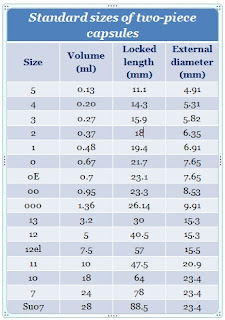
Different sizes of capsules:

Two-piece capsules come in different sizes (5 to su07) volume (0.13 ml to 28 ml), locked length (11.1 to 88.5 mm), and external diameter (4.91 to 23.4) to meet the needs of the customer. The following is a list of the various standard sizes of two-piece capsules.

types of capsules


Frequently Asked Question (FAQ):


What are the different types of capsule shells?
The capsule is a type of solid dosage form with hard or soft shells. Hard gelatin capsule, soft gelatin capsule, HPMC capsule, pullulan capsule, and enteric-coated capsule are the types of capsule shell.

What is the difference between hard gelatin capsules and soft gelatin capsules?
The major difference between hard gelatin capsules and soft gelatin capsules is that the hard gelatin capsule is used for those medicines which include dry powder, and granules, while soft gelatin is used for a drug that contains liquid and semi-solid.

What are the types of tablet coating?
Enteric coating, sugar coating, gelatin coating, film coating, and compression coating are some of the types of tablet coating.

What is the advantage of capsules?
The major advantage of the capsule is that we can prepare a unique mixture of drugs or ingredients in a single dose that is not possible in other types of solid dosage forms.

What types of diseases can be diagnosed with capsule endoscopy?
Capsule endoscopy is used to view parts of the GI tract that other types of endoscopy cannot see.


References:
  1. Wikipedia contributors. Capsule (pharmacy). In Wikipedia, The Free Encyclopedia. Retrieved from https://en.wikipedia.org/w/index.php?title=Capsule_(pharmacy)&oldid=1058802361
  2. EUROPEAN PHARMACOPOEIA (EP) 8.0
  3. S. Arora, et al., “Capsules” in Theory and Practice of Industrial Pharmacy by Lachmann and Lieberman, R.K. Khar, S. P. Vyas, F.J. Ahmad, and G.K. Jain, Eds. (CBS Publishers & Distributors, 4th ed., 2013), pp. 546-578.
  4. Dr. Sven Stegemann, Capsugel, Bornem, Hard gelatin capsules today – and tomorrow (2nd edition 2002), Retrieved from https://cpsl-web.s3.amazonaws.com/kc/library/hard-gelatin-capsules-today-and-tomorrow.pdf


Monday, December 6, 2021

Advantages and Disadvantages of Capsules

The major advantage of capsules is that its ability to act as an effective oxygen barrier and it is good chemical stability and helps increase product stability as well as is easy to swallow.

Dosage forms are pharmaceutical products that are specific combinations of drugs and excipients that can be formulated in a variety of ways, including solid, liquid, semi-solid, and gaseous dosage forms.

What is capsule dosage form?

A capsule is a form of solid dose in which the one or more active pharmaceutical ingredients (API) and excipients are enclosed in a hard or soft soluble shell, generally as gelatin. The shell is usually made of gelatin or other suitable polymeric substance, and this produces a simple, odorless, tasteless, elegant, and easy-to-swallow dosage form that does not require a further coating step.

Capsules are classed as either hard gelatin or soft gelatin depending on the nature of the capsule shell. Soft-shelled capsules are used for oils and medicines that are dissolved or suspended in oil, while hard-shelled capsules are used for dry, powdered ingredients.

A capsule is a common form of dose for oral administration, let's check some advantages and disadvantages of capsules.

Advantages of Capsules:

  • Capsules can mask the odor and taste of unpleasant medicines and can be simply administered
  • Easy to swallow with water
  • Fewer excipients are required than tablets.
  • Easily and rapidly digested
  • It's easy to handle and take
  • The capsule is economical than other dosage forms
  • The appearances of capsules are attractive
  • The gelatin shell can give protection of the drug from light
  • The shells of capsules are physiologically inert
  • It digested easily and quickly in the gastrointestinal tract
  • Capsules have a higher bioavailability than tablet dosage forms
  • It is easy to formulate and does not require any compression
  • A high degree of flexibility to the formulation

Disadvantages of Capsules:

  • Medicines that absorb water from the hygroscopic capsule shell make it brittle and therefore are not appropriate for the capsule filling
  • Concentrated solutions requiring previous dilutions are inappropriate for the capsule since irritation of the stomach
  • Not appropriate for highly efflorescent substances
  • For storage purposes, it required special conditions
  • It may cause gastric irritation
  • Components with low density, low melting point medication cannot be dispensed.
  • When compared to tablets, the production speed is slower
  • Gelatin-reactive materials cannot be dispensed
  • Materials that are reactive with gelatin cannot be dispensed
  • It may not be suitable for high-dose of drugs
  • Low density, low melting point components, and high dose drugs cannot be dispensed.
  • The speed of production is less as compared to tablets


Sunday, December 5, 2021

Advantages and disadvantages of gravimetric analysis method

 The gravimetric analysis is more advantageous if the protocols are followed carefully, it can produce extremely exact results.


To determine the amount of a certain component present in a sample, analytical techniques such as gravimetric, volumetric, and instrumental analysis are often used. We use a known amount of a known solute to quantify an unknown chemical in an analysis. This measurement can be expressed as volume or weight. When it is volume, we call it volumetric analysis, and when it is the weight we call it gravimetric analysis.

What is gravimetric analysis?

In analytical chemistry, gravimetric analysis is a type of quantitative analysis that is used to determine the mass of an unknown analyte in a sample. This technique uses the precipitation method to separate the compound from a sample, and they convert a dissolved substance (liquid) into a precipitate (solid) that can be weighed. Gravimetric analysis works on the principle of converting an ion, element, or radical into a pure stable state.

If the sample contains a mixture of solids, it must be dissolved in a suitable solvent before adding a reagent (precipitation agent) that will precipitate the particular component. Finally, filter the precipitate and weigh it. The determination of chloride in a chemical is one of the examples of gravimetric analysis.

The four basic types of gravimetric analysis are volatilization (physical gravimetry), precipitation, thermogravimetry, and electrodeposition (electrogravimetry), and these methods differ in sample preparation, before weighing the solute.

Advantages of gravimetric analysis:

  • When modern analytical balance is used in this method it is more exact.
  • It is an absolute method that requires no calibration and requires direct measurement.
  • It can produce extremely exact results if the protocols are followed carefully.
  • Filtrates can be evaluated for completeness of precipitation to identify potential sources of errors, and the presence of contaminants in precipitates could be examined.
  • Gravimetry has a minimal instrumental error and does not need the use of a series of standards to determine the unknown.
  • The gravimetric analysis was also used to determine the atomic masses of many elements in the periodic table with an accuracy of six figures.
  • The gravimetric method can be performed with a relatively inexpensive apparatus.

Disadvantages of gravimetric analysis:

  • The major disadvantage of the gravimetric method is that it takes a long time to complete.
  • Gravimetric analysis is typically limited to analyzing a single element or limited group of elements, at a time.
  • In today's world, chemists prefer this method.
  • These types of methods are usually complex, and even a slight mistake in a process can often mean disaster for the analysis.
  • Gravimetric analysis is based on mass measurement.


Frequently Asked Questions (FAQ):


What is meant by titration and types of titration?
A titration is a method of estimating the concentration of an unknown solution (Titrand) by comparing it to a known concentration solution (Titrant). Acid-base, precipitation, complexometric, and redox are the different types of titration.

What are the steps involved in gravimetric analysis
Preparation of the sample solution, precipitation process, digestion of the precipitate, washing and filtering the precipitate, drying, and ignition, weighing the precipitate are the major steps involved in this method.

What are the applications of gravimetric analysis?
It is used to determine the inorganic anions, cations, chloride, SO2, CO2, and iodine, etc. and it is also used to calibrate other instruments.


Referrences:

  1. Earnest, Charles M., and Larry Wilson. 2000. Quantitative Analysis: Gravimetric, Volumetric & Instrumental Analysis, 4th edition.
  2. Wikipedia contributors. "Gravimetric analysis." Wikipedia, The Free Encyclopedia. Wikipedia, The Free Encyclopedia, 31 Aug. 2021.
  3. Dhakatutor.com. “Advantages and Disadvantages of Gravimetric Method.” Dhakatutor.com, http://dhakatutor.com/article/view/16.

Saturday, December 4, 2021

Gravimetric analysis: Principle, Types, Example, Steps, Procedure, and Applications

Learn about the principle, types, applications, advantages, and steps of gravimetric analysis which is a method for determining the amount of analyte based on the mass of a solid.

Analytical techniques such as gravimetric, volumetric, and instrumental analysis are commonly used to determine the quantity of a certain component present in a sample. In an analysis, we use a known amount of a known solute to determine the amount of an unknown compound. 

This quantity can be expressed as volume or weight. When it comes to volume, we refer to it as volumetric analysis and when it comes to weight, we refer to it as gravimetric analysis.


What is gravimetric analysis?

Gravimetric analysis is a type of quantitative analysis used in analytical chemistry to measure the mass of an unknown analyte in a sample. Precipitation reactions are employed in this method to separate the target component from a sample, and they can convert a dissolved compound (liquid) into a precipitate (solid) so that we can weigh it.

If the sample contains a combination of solids, they must dissolve it in a suitable solvent before adding a reagent that will precipitate the specific component, which is known as a precipitating agent. Finally, filter and weigh the precipitate.

Example: To determine the amount of solids suspended in the water sample- after a particular volume of water has been filtered, the collected solid particles are weighed.
"Gravitational analysis is a laboratory procedure for quantitative analysis based on the mass of an analyte"

Types of gravimetric analysis:

Volatilization, precipitation, thermogravimetry, and electrodeposition are the four primary methods of gravimetric analysis. These 4 methods differ in sample preparation before weighing the solute. One of the most popular methods of environmental engineering measurement is physical gravimetry. 

There are two basic types of these methods, both of which involve changing the phase of the analyte so that it can be separated from the rest of the mixture, resulting in a change in mass.

Volatilization:

It is a type of gravimetric analysis also known as physical gravimetry which involves the separation of components mixture either by heating or chemically decomposing them.

Precipitation:

It is a type of gravimetric method which involves the separation of one or more parts of a solution into a solid using a precipitation reaction.

Electrodeposition:

It is a type of gravimetric analysis also known as electrogravimetry; it is a technique for separating and quantifying ions of a particular substance, most commonly a metal.

Thermogravimetry:

Thermogravimetric analysis is a type of thermal analysis that measures changes in physical and chemical properties of materials as a function of increasing temperature or as a function of time.

Principle of gravimetric analysis:

The principle of gravimetric analysis is based on determining the mass percent (%) of an ion in an impure compound of a known amount. Later, it is used to calculate the mass percent of the same ion in a known amount of impure substance.

The following are some of the requirements that must be met for the analysis to be accurate:
  • The ion to be studied should be completely precipitated
  • The precipitate should be in a pure form
  • The obtained precipitate should filter out easily.

Example of gravimetric analysis:

To determine the amount of Ba present in a known sample of BaCl2, sulfuric acid (H2SO4) can be used to form insoluble barium sulfate (BaSO4) complex from a solution of an unknown volume of barium chloride (BaCl2).

This BaSO4 can then be used to determine the amount of barium in the precipitate and then determine the mass percentage of barium in BaCl2. When selecting a precipitating agent, keep in mind that it should form a pure insoluble complex with the compound of interest that can be simply filtered.

The determination of chloride in a chemical is another example of gravimetric analysis.

Steps of gravimetric analysis:

  • The ion of interest must be entirely isolated to determine its mass. Ion isolation is accomplished with the aid of precipitation. The following are common gravimetric analysis steps:
  • The first step is to make a sample solution with a known weight of the analyte.
  • The second step of gravimetry involves the separation of the desired ion or element or radical in pure forms using various separation techniques.
  • The third step involves weighing the amount of pure insoluble solute formed after the ion has been separated.
  • Calculate the amount of a certain constituent in a sample based on the weight of the substance separated.

    STEPS INVOLVED IN GRAVIMETRIC ANALYSIS:
    Preparation of the sample solution
    Precipitation process
    Digestion of the precipitate (or) Ostwald ripening
    Washing and Filtering the Precipitate
    Drying and Ignition
    Weighing the precipitate

Experimental procedure for gravimetric analysis:

  • Fill a weighing bottle enough with the unknown, place the lid on sideways, and dry in the oven. In desiccators, cool it.
  • Weigh 0.1 mg of the unknown into a beaker using indirect methods.
  • Then, dissolve the unknown.
  • To the solution, add a precipitant agent.
  • Test for complete precipitation, by dropwise addition of precipitating agent and look for signs of precipitation.
  • After that, using the vacuum filtration filter the solution. Dry and weigh the precipitate.
  • To determine the mass of the ion being studied, use stoichiometry.
  • Finally, divide the mass of the compound by the mass of the unknown to determine % by mass of the compound.

Advantages gravimetric analysis:

  • It offers extremely accurate results if the processes are followed carefully.
  • It is an absolute method, requiring direct measurement without any calibration.
  • The analysis is performed with precision employing sensitive and moderate balancing.
  • It's used to calculate the atomic masses of a variety of elements to six-figure precision.
  • Gravimetry allows relatively low instrumental error and does not require a series of standards to calculate the unknown.

Applications of gravimetric analysis:

  • Gravimetric analysis is a technique for determining the amount of analyte or, more precisely, the ion being studied.
  • It is used to determine the inorganic anions and cations.
  • It is used to determine SO2, CO2, and iodine.
  • It is utilized to calibrate other instruments, as this technology may easily produce exact and widely correct data.
  • Determination of plasma volume is one of the most common applications is in biology and medicine.
  • It can be used in a variety of industries to analyze the nickel content in stainless steel.
  • Gravimetric is used for the determination of chloride.
  • It is also used to teach science students with practical experience to understand the concept.

Frequently Asked Questions (FAQ):


What is the difference between gravimetric and volumetric analysis?
Gravimetric and Volumetric both are quantitative methods for calculating the amount of sample in a solution or the purity of a compound, the mass of the analyte is determined by gravity analysis, while the volume of the analyte is determined by volumetric analysis.

What is titration in chemistry and its types?
A titration is a technique for determining the concentration of an unknown solution (Titrand) using a solution (Titrant) of known concentration. The titrant is typically added to a known quantity of the analyte from a burette until the reaction is complete. 

Generally, an indicator is used to detect the endpoint or equivalence point. Acid-base, precipitation, complexometric, and redox are the different types of titration.

What is the three theories principle that governs gravimetry?
The essential principles and theories of gravimetric analysis are the law of mass action and reversible reactions, the principle of solubility product, and the common ion effect.


References:

  1. Wikipedia contributors. "Gravimetric analysis." Wikipedia, The Free Encyclopedia. Wikipedia, The Free Encyclopedia, 31 Aug. 2021.
  2. Skoog, Douglas A; West, Donald M; Holler, F James (1995). "5.6". Fundamentals of Analytical Chemistry (Seventh ed.).
  3. Principle & steps involved in gravimetric analysis, Available Here:
  4. Gravimetric analysis. Gravimetric Analysis - an overview | ScienceDirect Topics. (n.d.), Available Here:
  5. Principle and steps involved in gravimetric analysis. Pharmaceutical Guidelines. Available Here:

Wednesday, December 1, 2021

Why sodium hydroxide is not a primary standard

The sodium hydroxide is cannot be used as a primary standard, mainly because NaOH is hygroscopic and absorbs carbon dioxide (CO2) from the air.

Titration is a process in which a small amount of reagent is added to a solution until a chemical reaction (endpoint or equivalence point) occurs. The reaction confirms that the sample solution is at a certain concentration.


We utilize standards that contain known amounts of analyte to standardize an analytical method. Standardization is a titration technique that uses a standard solution as a reference to determine the exact concentration of a prepared solution. In chemistry, standardization is a titration technique that uses a standard solution as a reference to determine the precise concentration of a prepared solution. Standard solutions are prepared using standard compounds and have concentrations that are accurately calculated.

What is primary and secondary standard?

The two most common forms of standard solutions are primary and secondary standard solutions. Primary standards are used to standardize secondary standard solutions, while secondary standards are used for certain types of analytical experiments.

Primary standards are very pure (99.9% accurate), and stable, with specific chemical and physical properties. As a result, we can make pure solutions using these compounds. Titration and other analytical procedures often use primary standards to determine unknown concentrations of solutes. Common examples of the secondary standard are sodium carbonate (Na2CO3), potassium dichromate (K2Cr2O7), and potassium hydrogen phthalate (KHP), etc.

The purity of the secondary standard solution is low, and the reactivity is high when compared to primary standards. Because of their high reactivity, these solutions are easily contaminated. A most common example of the secondary standard is sodium hydroxide (NaOH).

A primary standard should have the following properties:

  • It must be very stable and non-toxic.
  • It should not decompose, absorb or react with moisture or air.
  • It must have a high degree of accuracy when weighing in the air or ambient temperature.
  • It should dissolve easily in water or any other solvent.
  • It must be available in a high purity state.

Why is NaOH not a primary standard?

Here are some most important reasons why solid NaOH is not used as a primary standard are mentioned.
  • Because NaOH does not fulfill all of the preconditions/ criteria/properties for a good primary standard that was described above, it is not a suitable primary standard.
  • When exposed to air for a few minutes, NaOH becomes very delinquent, meaning it gets watery.
  • Because specific components in ambient air, such as carbon dioxide (CO2), sulfur dioxide (SO2), hydrogen sulfide (H2S), and some other acid gases are reacted quickly with it and it also continues to attract moisture, becomes increasingly diluted over time.
  • NaOH solutions do not last long unless maintained under nitrogen since they absorb CO2 from the air very quickly, reducing the concentration.
Why sodium hydroxide is not a primary standard

Why KMnO4 is not used as a primary standard?

Potassium permanganate is not used as the primary standard, because it is not free of MnO2, the pure form of KMnO4 is difficult to obtain, it decomposes in presence of sunlight, It reacts readily with any trace of organic matter or any other reducing substance in water, and its color is intense that it acts as its self indicator.


Frequently Asked Questions (FAQ):


Why is NaOH not used as a primary standard for titration analysis?
The principle reason that NaoH is not used as the primary standard for titration is that the sodium hydroxide is highly hygroscopic and not available in high purity, it cannot be used to prepare primary standard titration solutions.

Is H2SO4 a primary standard?
No, sulfuric acid is not used as a primary standard because H2SO4 is hygroscopic, its concentration in air changes rapidly. Strong acids or bases, such as H2SO4, HCl, HNO3, NH4OH, and NaOH are not considered to be primary standard solutions.

Why does sodium hydroxide have to be standardized?
Before starting the titration, it is necessary to standardize the prepared molar/normal solution to determine the exact concentration.


References:
  1. Wikipedia contributors. "Sodium hydroxide." Wikipedia, The Free Encyclopedia. Wikipedia, The Free Encyclopedia, 8 Nov. 2021.
  2. Helmenstine, Anne. ‘What Is a Primary Standard in Chemistry?’ Science Notes and Projects, 29 Mar. 2021, https://sciencenotes.org/what-is-a-primary-standard-in-chemistry/.
  3. Study.Com, https://study.com/academy/answer/1-sodium-hydroxide-cannot-be-used-to-prepare-a-primary-standard-titration-solution-because-the-compound-is-not-available-in-high-purity-the-most-common-impurity-is-water-because-sodium-hydroxide-is-h.html.

Tuesday, November 30, 2021

Pharmaceutical Applications of Column Chromatography

Column chromatography is a separation technique that is used to purify compounds based on their hydrophobicity or polarity. The principle of column chromatography depends on the differential adsorption of a solute by the stationary phase (adsorbent). The mixture of complex molecules of analytes are separated based on differential partitioning among a stationary phase and a mobile phase, there are various sizes of the column are available for this technique.

In the process, the analytes to be separated are placed on top of a solid adsorbent-packed column. Then the mobile phase is loaded into the column at the top and the column is allowed to flow slowly and continuously. Components with less adsorption and affinity toward the stationary phase travel rapidly than those with higher adsorption and affinity for the stationary phase. Fast-moving components are eluted first, followed by slow-moving components.

Different types of column chromatography such as adsorption column chromatography, partition column chromatography, gel column chromatography, and ion-exchange column chromatography are used to separate the active ingredients by various methods.

Applications of column chromatography:

  • Column chromatography can be used to isolate many classes of drugs and components such as glycosides, plant extracts, alkaloids, amino acids, formulations, and drugs. 
  • Used for separation of the mixtures of compounds. 
  • It is used to remove impurities or the purification process. 
  • In column chromatography Impurities in a compound can be separated by using the appropriate mobile phase and a stationary phase. 
  • It is applied to the separation of active constituents. 
  • From the crude extracts, formulation, active constituents, plant extract necessary constituents can be isolated by this type of chromatography.
  • Column chromatography is used for the estimation of the drug in the formulation. 
  • From the biological fluids, metabolites can be separated using column chromatography.
  • Using this method, it is possible to the estimation of the drug in the crude extract.
  • For the isolation of active ingredients from plants, column chromatography is the most preferred and only separation technique in phytochemistry.

Chromatography is commonly used in chemical and life science research for a variety of purposes. The importance of chromatography techniques can be seen in their widespread use in a variety of sectors for a variety of objectives. HPLC, GC, TLC, adsorption, partition, affinity, and paper chromatography are some of the types of chromatography that have several applications in different fields.

General applications of chromatography are pharmaceutical industries, food industry, fuel industry, environmental analysis, forensic science, biotechnology, biochemical processes, and biological application, molecular biology studies, etc.