Showing posts with label Precipitation titration. Show all posts

Wednesday, February 22, 2023

Conditions and requirements for the precipitation titration

A volumetric analysis in which a precipitate is formed, or when the analyte and titrant react to form a precipitate throughout titration, is known as precipitation titration. The process of titration known as "precipitation titration" helps in the formation of precipitate during the method of titration.

Volhard's, Mohr's, and Fajan's methods are three types that can be used to perform precipitation titrations. In the process of precipitation titration, the titrant reacts with the analyte to form a substance that is insoluble. 

This process continues until the last drop of the analyte has been consumed. Precipitation Titration is used to determine the presence of salt, halide ions, chloride, bromide, iodide, halogen, metal ions, etc.

What conditions are necessary for precipitation titration?

  • It should only involve a single suitable stoichiometry reaction.
  • It must be an extremely quick reaction.
  • At the endpoint, it must display the change in the reactant’s concentration.

What are the requirements for precipitation titration?

  • It has fast precipitation
  • It is necessary that the precipitate be practically insoluble
  • There should be no change in the oxidation state
  • During titration, it is essential that the equivalence point can be identified.
  • The formation of the precipitate is stoichiometric
  • The results of the titration should not be distorted appreciably by adsorption.


Keywords:

NaCl, curve, acid-base, argentometric, chloride ions, steps, class, student, reaction, chemistry, chemical reaction, and NaOH, etc.


Tuesday, February 21, 2023

Factors affecting precipitation titration

Precipitation titration is a type of titration that includes the formation of precipitate during the titration technique. In the process of precipitation titration, the titrant reacts with the analyte to form a precipitate, which is an insoluble substance. This process will continue till the last amount of analyte is consumed. Using silver ions, it can estimate the concentration of chloride.

Precipitation titration refers to volumetric methods which work on the following principle.

Amount of added precipitating reagent = quantity of substance being precipitated

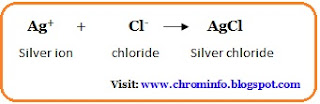
For example: Ag+ (aq) + Cl–(aq) → AgCl(s).

Precipitation titrations help to determine the concentration of salt in food, and beverages and to analyze drugs and halide ions in a sample solution.

Factors Affecting the Precipitation Titrations:

  • Solvent nature:
The polarity has directly proportional to the precipitate formation. If the solvent has more polarity, it will improve the precipitation; For example, the formation of precipitate will be increased by the presence of water.

  • Reactants concentration:
The concentration of reactants present in a solution is directly proportional to the precipitation reactions that take place. Concentrated solutions form precipitates that are easily soluble, while diluted solutions produce precipitates that are unstable.

  • Order of adding reagents:
The order of adding reagents is significant in the precipitate's formation. As several compounds need pretreatment with an alkali or an acid before the precipitating agent is added, and other compounds need to be treated with an alkali or an acid after the precipitating agent has been added.

  • The pH of the solution:
Precipitation titrations are directly proportional to the solution's pH. In contrast with basic solutions, acidic solutions enhance the precipitate formation.

  • Low solubility product formation throughout the titration:
The endpoint in the precipitation titrations decreases as a result of the formation of the low solubility product during precipitation. Therefore, it can be overcome by modifying the pH of the solution.

  • Temperature:
The precipitation formation has a relationship that is directly proportional to temperature. As the temperature rises, the capacity for the formation of precipitates also improves.

  • Concentration and nature of foreign substances:
The concentration of foreign chemicals in precipitation products reduces the product's stability. The ability of foreign compounds to form coprecipitation is then taken into account. By keeping the temperature at an ideal level during the titration, you will avoid the problems associated with this condition.


Keywords:

NaCl, curve, argentometric, chloride ions, Volhard’s, Fajan’s, Mohr’s, halide, class, student, reaction, chemistry, analyte, titrant, chemical reaction, NaOH.

Monday, May 23, 2022

Precipitation titration: Principle, Example, Types, Indicators, Applications, and Importance

Learn about the principle, types, and applications of precipitation titration, which involves the formation of precipitate during the titration technique.

Chemical analysis plays an important role in the study of the composition of substances or materials. It is broadly divided into two types qualitative and quantitative analysis. Titration is also known as titrimetry or volumetric analysis. 

It is an analytical technique used to estimate the concentration of an analyte in a sample solution that is widely used in chemistry laboratories since it offers several applications and advantages.

Titration is carried out by using a burette containing a titrant with known concentration is placed above the conical flask or beaker of a solute. The titrant is added until the reaction is complete; the endpoint or equivalence point is usually indicated with an indicator. 

There are many different forms of titration such as acid-base titrations, redox titrations (oxidation-reduction), precipitation titrations, and complexometric titrations, in which each type involves a different type of chemical reaction.


What is precipitation titration with example?

Precipitation titration is a type of titration that involves the formation of a precipitate during the titration process. Precipitation titration refers to volumetric methods based on the formation of a slightly soluble precipitate, whereas the precipitating titration based on the use of silver nitrate (AgNO3) as a precipitating agent is known as the argentometric method.
Principle and types of precipitation titration

In a precipitate titration, the titrant reacts with the solute to produce an insoluble substance (precipitate). It continues until all of the solutes have been consumed in which uses silver ions to determine chloride levels. 

It is an important technique for determining halogens and certain metal ions. Precipitation titration is an important topic for class 12.

Precipitation titration example:

To estimate the chloride ion concentration in a sample solution, we can titrate it with a known concentration of silver nitrate solution.
The following chemical reaction takes place:
Ag+(aq) + Cl–(aq)→ AgCl(s).
  • During the titration, AgCl settles to the bottom of the conical flask in the form of a white precipitate.
  • The amount of silver ion used to reach the equivalence point is the same as the amount of chloride ion present at the start. The amount of silver ion used for the equivalence point is the same as the amount of chloride ion originally there.
  • Use n = cV to calculate the number of moles of silver or chloride ion.

What is the principle of precipitation titration?

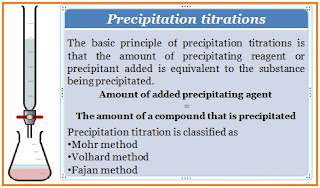
The basic principle of precipitation titrations is that the amount of precipitating reagent or precipitant added is equivalent to the substance being precipitated.

Amount of added precipitating agent = the amount of a compound that is precipitated

Precipitation titration curves:

The change in concentration of either a titrant or a titrand as a function of the titrant's volume is followed by a precipitation titration curve.
  • The precipitation titration curves are represented by:
  • During titration, the concentration of reactants changes
  • When using the indicators, there is a chance of titration error
  • The conditions at the equivalent point

Indicators used in precipitation titration:

For precipitation titration, there are three types of indicators are used, two of them are used chloride ions, while one is used cation silver.
  • In Mohr's titration, silver nitrate, or potassium chromate can use as an indicator to determine the concentration of chloride, which produces red silver chromate.
  • In Volhard’s titration, the ferric ion can use as an indicator to determine the silver ions, which produces red-brown color.
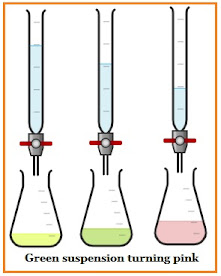
  • In Fajan’s titration, the dye dichlorofluorescein can use as an indicator to the determination of chloride, the endpoint being identified by the green suspension turning pink.

Determination of endpoint in precipitation titrations:

Ag+ titrations are known as argentometric titrations. To identification of endpoint in argentometric titration, three traditional methods based on color indicators can be used.
  • In Mohr's titration, the formation of colored precipitate at the endpoint
  • In Volhard’s titration, the formation of a soluble, colored complex at the endpoint
  • In Fajan’s titration, adsorption of a colored indicator on the precipitate at the endpoint

Types of precipitation titration:

There are three types of precipitation titration. According to the type of application and endpoint detection method, precipitation titration is classified as the Mohr method, Volhard method, and Fajan method.

Mohr method:

It is a type of precipitation titration used to determine the chlorides by titration with silver nitrate. It uses chromate ions (CrO42-) as the indicator, for the argentometric determination of bromide, cyanide and, chloride ions.

Volhard method:

The Volhard method is a type of precipitation titration to determine the bromine, chlorine, and iodine in the halide by precipitating it with excess silver nitrate and titrating the excess by addition with standard potassium thiocyanate (KSCN). It is performed in an acidic solution.

Fajan method:

It is a type of precipitation titration in which the reaction between the produced precipitate and the predictor is used in this method. Dichlorofluorescein is used as an indicator that acts as an anion in the solution.

Applications of precipitation titration:

  • Precipitation titration is most commonly applied for reactions where the titration cannot be recognized by changing the color.
  • The determination of halide ions or silver content using a sodium chloride (NaCl) solution is a typical use of precipitation titration.
  • The concentration of ions in the analyte sample can be determined using this method.
  • It is used to determine the salt content in water, food, and drinks, etc.
  • It has pharmaceutical applications also, such as analysis of carbromal, infusion of sodium chloride (NaCl), and potassium chloride (KCl) infusion, etc.

What is the importance of precipitation titration?

Precipitation titration is an important method in chemistry as it allows for an accurate determination of halogens and some metal ions concentration in the sample solution.


Saturday, March 26, 2022

Fajan's method of precipitation titration

Learn about the definition, principle, reaction, indicator, endpoint, and advantages of Fajan’s method.

Titration is a method of determining the concentration of an unknown solute using a known concentration solution. In which a titrant is usually applied from a burette to a known compound volume until the reaction is complete, the endpoint is detected using an indicator. Acid-base titration, redox titration, precipitation titration, and complexometric titration are all types of titrations.

What is precipitation titration?

Precipitation titration is a type of titration in which the titration reaction formed a precipitate. The titrant reacts with the compound to produce an insoluble substance (precipitate). This uses silver ions to find out chloride levels and continues until all compounds have been consumed.

Precipitation titration is a volumetric process based on the formation of a slightly soluble precipitate. On the other hand, the argentometric technique is a precipitation titration method that uses silver nitrate (AgNO3) as the precipitating agent. There are three forms of precipitation titration: Mohr, Vollhard, and Fajan.

Principle involved in precipitation titrations:

The basic principle of precipitation titrations is that the amount of precipitating reagent or precipitant added is equivalent to the substance being precipitated.

Amount of added precipitating agent = the amount of a compound that is precipitated

What is Fajan’s method in chemistry?

The Fajans method is an analytical technique that uses adsorption to detect halide content. This technique was presented by Kazimierz Fajan, a chemist from the United States, for this reason, it is called Fagan's method. It is commonly used to quantitatively analysis of halide ions or thiocyanate ions.

Silver chloride is also known as indication adsorption as chloride ions are adsorbed on its surface. This method uses a dichlorofluorescein indicator. The suspension (of AgCl and indicator) has reached the endpoint when it turns pink from green.

Definition of Fajan’s method:

"Fajan's method is a precipitation titration in which silver ions are titrated with halide/thiocyanate ions in the presence of an adsorption indicator"

Example of Fajans method:

Cl– ions titration using AgN03 in the presence of an adsorption indicator, in which, AgN03 is filled in a burette, and Cl– ion solution with indicator is added in a conical flask.

Reaction involved in Fajans method:

Adsorption indicators work differently than chemical indicators and they can be used in a different precipitation titration, not simply argentometric ones. Assume we want to analyze Cl- in a sample solution by titrating with Ag+. The titration reaction would be

Ag+ + Cl− ⇌ AgCl(s)

Colloidal particles are formed by silver chloride. Because of the adsorption of excess Cl- to the surface of the precipitant particles before the equivalence point, the surface of the precipitant particles will be negatively charged.

Indicator used in Fajan’s method:

The dye dichlorofluorescein can be used as an indicator to determine chloride in Fajan's titration, by which the endpoint is detected by the green suspension turning pink.

Fajan’s method endpoint:

When the anionic indicator becomes adsorbed on the cationic particles of the precipitate, the green suspension turns pink, this is the endpoint in Fajans titration. The indicator for the titration of Cl- with Ag+ is dichlorofluorescein.

Fajan's method of precipitation titration

Frequently Asked Question (FAQ):

Which titrant is used in the Fajan method?

In the Fajans method for Cl-, Ag+ is used as a titrant. This method is used to detect the concentration of chloride is in a sample. The sample solution is titrated against a known concentration of silver nitrate (AgNO3) solution. When AgNO3 is added to a solution containing chloride ions results in the formation of a finely divided white precipitate AgCl.

What is the method used in Fagan’s method?

The indicator absorption method is used for Fajan's method.

Which titration is known as argentometric titration?

The titrations with silver nitrate are known as argentometric titration. This titration is used to determine the concentrations of chloride, bromide, and cyanide ions. As an indicator, sodium chromate is used.

What is Fajans rule give one example?

According to Fagan's rule, a compound with a low positive charge, a large cation, and a small anion form an ionic bond, whereas a compound with a high positive charge, a small cation, and a large anion form a covalent link. For example, an aluminum atom with a +3 charge, has a greater positive charge.


References:

Tuesday, December 21, 2021

Volhard method: Reaction, Example, Procedure, Advantages & Precautions

It's a technique for determining chlorine, bromine, and iodine in halides by precipitating them with excess silver nitrate and titrating the excess with a solution of thiocyanate.

Precipitation titration is a type of titration in which a precipitate forms during the process of titration. Precipitation titration refers to a volumetric technique based on the formation of a slightly soluble precipitate, while the argentometric method refers to the titration using silver nitrate (AgNO3) as a precipitating agent. The most common application of this type of titration in analytical chemistry is to determine chloride using silver ions.


In a precipitation titration, the titrant reacts with a solute to produce an insoluble substance. It detects chloride levels using silver ions and continues until all solutes have been consumed. Precipitation titrations are classified as Mohr's method, Volhard’s method, and Fajan's method, depending on the type of application and method of detecting the endpoint.

What is Volhard's method of analysis?

In chemistry, Volhard’s method is a type of precipitation titration which is used for titrating silver with potassium thiocyanate standard. The titration is performed in an acidic solution. The first excess of titrant and the iron (III) indicator react to generate a soluble red-complex after the silver (I) is precipitated as white silver thiocyanate. Because the titration can be performed in an acidic solution, this technique is widely used for silver and chloride.

Volhard nethodVolhard’s method was first reported in 1874 by German chemist Jacob Volhard. This technique determines halide ions (F, Cl, Br, I) and anions such as phosphates and chromates in acidic environments using silver ions. If the Volhard titration is not performed in an acidic medium, the iron ion will precipitate as hydrated oxide. Volhard's method uses iron ion as an indication. The first analyte (halide ion solution or any other anionic solution) is titrated with a measured excess of AgNO3.

The reaction involved in Volhard method:

If analyte contains chloride anions, the reaction will be as follows.

To titrate Ag+; determination of Cl- involves a back titration

First, Cl- is precipitated by excess AgNO3

Ag+ (aq) + Cl- (aq)     AgCl(s)

In the presence of Fe3+, excess Ag+ is titrated with KSCN

Ag+ (aq) + SCN- (aq)  AgSCN(s)

When Ag+ has been consumed, a red complex forms

Fe3+ (aq) + SCN- (aq)   [FeSCN]2+(aq)


Example of Volhard titration method:

The titration of silver with ammonium thiocyanate using ferric alum as an indicator is an example of a Volhard titration in which a colored substance is formed in the solution.

Procedure of Volhard titration method:

  • Procedure for determination of chloride ion concentration by titration (Volhard’s Method)
  • Fill the burette with 0.1 M potassium thiocyanate solution and adjust the zero.
  • Measure 100 ml of the sample and pour it into a conical flask.
  • Add 01.00 ml of ferric ammonium sulphate solution as an indicator.
  • Using the potassium thiocyanate (KSCN) solution, titrate the unreacted silver ions.
  • Because of the ferric thiocyanate complex, the endpoint is the appearance of a dark red color.
  • Repeat the titration three times to get an accurate result.
  • Calculate the moles of potassium thiocyanate used.

Conditions and precautions of Volhard method:

  • To avoid the precipitation of iron (III) as hydrated oxide, titration should be performed in an acidic medium.
  • The concentration of the indicator should not exceed 0.2 M.
  • The concentration of nitric acid (HNO3) in the resultant solution should be between 0.5 and 01.00 M during the titration.
  • The temperature of the solution must be kept below 25°C as the red color of the ferric thiocyanate complex fades quickly at higher temperatures.

Advantages of Volhard method:

  • It can analyze direct silver and indirect halide and has a very distinct color change.
  • This method is useful where titration is to be carried out at low pH.
  • The strong acidic conditions give an advantage for analysis halide since ions such as carbonate, oxalate, and arsenate do not interfere.
  • It can provide accurate results due to back titration.


Frequently Asked Questions (FAQ):

What is the principle of precipitation titration:

The principle of precipitation titration is: Amount of added precipitating agent = the amount of a compound that is precipitated.

Why is Nitric acid used in the Volhard method?

It is used to provide the acidic medium and to prevent the precipitate of iron (III) as hydrated oxide.

Which indicator is used in the Volhard method?

In the Volhard method, Fe3+ (ferric ion) is used as an indicator, which produces dark red color at the endpoint of the reaction.

Why is the Volhard method performed in an acidic system?

To avoid Fe3+ precipitation as Fe (OH) 3, the titration must be performed in an acidic solution (pH 01-03) than the basic medium.

What is the use of the modified Volhard method?

The modified Volhard method is the advanced version of Volhard’s method used to determine the anions that precipitate with silver.

Why nitrobenzene is used in Volhard’s method?

To mask Ag+ ions of silver chloride; otherwise, these Ag+ ions will react with thiocyanate to form silver thiocyanate, resulting in a significantly higher titration reading and a high chloride content.

Sunday, December 19, 2021

Mohr’s method: Principle, Procedure, Applications & Advantages

Mohr’s method is a type of precipitation titration that uses silver nitrate to determine chloride. For the argentometric determination of bromide, cyanide, and chloride ions, it employs the chromate anion (CrO42-) as the indicator.


Precipitation titration is a type of titration in which a precipitate is formed during the titration process. Precipitation titration refers to volumetric techniques based on the formation of a slightly soluble precipitate, while the argentometric method refers to titrations using silver nitrate (AgNO3) as a precipitating agent. In analytical chemistry, the most common use of this form of titration is to determine chloride using silver ions.


The titrant reacts with the solute to form an insoluble material in a precipitate titration. It uses silver ions to detect chloride levels and continues until all solutes are consumed. Depending on the type of application and the method of endpoint detection, precipitation titrations are classified as Mohr's method, Volhard method, and Fajan's method.

What is Mohr's method in chemistry?

The method of titration in which the chloride ion concentration of a particular solution is determined by titrating it with silver nitrate is called Mohr’s titration. Mohr's technique is still used in many laboratories and is one of the oldest titration procedures.

Precipitation titrations are a type of volumetric analysis that is based on the formation of compounds with limited solubility. Specifically, titration methods based on the use of silver nitrate as a precipitation reagent are called argentometric titration. Mohr's technique, named after German scientist and pharmacist Karl Friedrich Mohr (1806–1879), uses AgNO3 titration to estimate the quantity of chloride ions.

When all chloride ions interact with silver ions, the endpoint of the titration is observed using potassium chromate as an indicator, producing a brownish-reddish silver chromate precipitate. Silver chloride is precipitated during the titration Ag+ + C‑ ­- AgCl, and the appearance of silver chromate indicates the endpoint (reddish-brown precipitate) of the titration 2Ag+ + CrO42 – Ag2CrO4. When all chloride ions have reacted with the silver ions, the new equilibrium solid phase is formed.

Principle of Mohr's method:

The principle of precipitation titration is- Amount of added precipitating agent = the amount of a compound that is precipitated.
Mohr’s method


AgNO3 solution is used to titrate the chloride. As an indicator, a soluble chromate salt (K2CrO4) is used. This results in a yellow solution, when the chloride precipitation is complete.

NaCl + AgNo3 ⇆ AgCl + NaNo3

After all, chlorides have precipitated as silver chloride, the first excess of Ag+ reacts with the indicator to form red silver chromate as a second precipitate.

2 Ag+(aq) + CrO42–(aq) → Ag2CrO4(s)

Mohr’s method is a direct method of titration in which a red precipitate of silver chromate is formed at the endpoint. This method is needed to be performed in the neutral to alkaline condition (pH of 08.00).

Procedure of Mohr’s method:

Requirements: Burettes, conical flask, pipette, analytical/digital balance, 0.1 M silver nitrate solution, potassium chromate solution, and distilled water, etc.
  • Fill the burette with a prepared solution of 0.05 N AgNO3.
  • Pipette out 10.00 ml of sodium chloride solution (NaCl) and pour in a stoppered conical flask.
  • Add 01.00 ml of 2% neutral potassium chromate indicator.
  • By shaking the liquid continually, titrate it with 0.05 N silver nitrate solutions, until the red color formed by each drop of AgNO3 solution begins to fade more slowly; this indicates that the majority of the chloride has precipitated and the endpoint is approaching.
  • Drop by drop; titrate until a faint but distinct, brick red color appears that does not disappear with vigorous shaking. The endpoint of this titration is a brick red color.

Detection of endpoint in Mohr’s method:

A small quantity of potassium or sodium chromate is added to the solution before titration to give it a slightly yellowish color. As long as chlorides are present during titration, the concentration of Ag+ is too low for silver chromate formation. Close to the equivalence point the concentration of silver cations increases rapidly, allowing precipitation of the intense red silver chromate, which indicates the endpoint of the titration.

Applications of Mohr’s method:

Mohr’s method is used to detect the concentration of chloride ions in water samples from a variety of sources, including river water, stream water, and a variety of pharmaceuticals and chemicals.

Advantages of Mohr’s method:

The Mohr technique has the advantage of being a direct, simple, rapid, and accurate technique for the determination of chlorides.


Frequently Asked Question (FAQ):

Which indicator is used in Mohr's method?

For the argentometric determination of chloride, bromide, and cyanide ions, the Mohr technique uses chromate ions (CrO42-) as the indicator.

Why Mohr's titration is performed in the neutral and slightly basic medium?

Since silver hydroxide forms at high pH while chromate forms H2CrO4 at low pH, the solution must be nearly neutral to reduce the concentration of chromate ions and delay the development of the precipitate.

Which type of solution is used in the Mohr method?

Mohr’s technique, which is used to estimate the chloride ion concentration of a solution by titration, uses silver nitrate solution.

What is the difference between Volhard and Fajan's method?

The Volhard method is an analytical technique used to determine the halide concentration using a back titration, while the Fajans method is an analytical technique by which we can determine the halide concentration by adsorption.


References:
  1. Wikipedia contributors. (2021, March 29). Argentometry. In Wikipedia, The Free Encyclopedia. Available Here:
  2. Mohr’s method challenge,Juris Meija, Available Here: 
  3. Kotrly S, Sucha L. Handbook of Chemical Equilibria in Analytical Chemistry, Ellis Horwood Series in Analytical Chemistry. New York: John Wiley and Sons; 1985.

Monday, August 30, 2021

Assay of sodium chloride

Learn about the assay of sodium chloride through a laboratory experiment or practical.

Aim:

To determine the percentage purity of given sample of sodium chloride using standard 0.1 N AgNO3 (Volhard’s method).

Requirements:

Glasswares: Burette, burette stand, conical flask, volumetric pipette, beaker, volumetric flask, funnel, glass rod, and wash bottle, etc.
Chemicals: LR grade silver nitrate (AgNO3), sodium chloride (NaCl), and potassium chromate (K2CrO4), etc.
Apparatus: Digital/analytical balance, and Ultrasonicator.

This practical is divided into two parts.
A. Preparation and standardization of silver nitrate (0.1 M)
B. To perform the assay of sodium chloride

Principle of assay of sodium chloride:

We already mentioned the principle of assay of sodium chloride in previous article (click here to visit).

Preparation and standardization of silver nitrate (0.1 M):

Click here to get the procedure of preparation and standardization of 0.1 M silver nitrate solution.

Preparation of sodium chloride solution (Sample):

Take 01 gm of sodium chloride and dissolve in 50 ml of distilled water in a volumetric flask, and properly mixing it. Once it has completely dissolved, make up the volume to 100 ml.

Titration procedure:

  • All glassware should be cleaned and dried according to standard laboratory procedures.
  • Before filling the burette for the titration, rinse it with distilled water and then pre-rinse it with a portion of the titrant solution. Pre-rinsing is required to make sure that all solution in the burette is the desired solution, not a contaminated or diluted solution.
  • Take the unknown stock solution of titrant in a clean and dry beaker then fill the burette using the funnel.
  • Remove air bubbles from the burette and adjust the reading to zero.
  • Take 10.00 ml of prepared sample solution of sodium chloride and pour it into a conical flask.
  • Add 2-3 drops of potassium chromate solution as an indicator.
  • Titrate the sample solution with silver nitrate solution until the endpoint is reached.
  • The actual endpoint of the titration is indicated by a brick red color at the end of the reaction.
  • To get accurate results, repeat the titration three times.
  • Properly record the readings of the burette.
  • Take their mean and calculate the molarity of the silver nitrate solution.

Observation table:

Sr. No.

Content in conical flask

Burette reading

Volume of titrant used (ml)

Initial

Final

1


2


3


Mean:


Calculations:

V x E x AM x 100 / W x RM

Where,
V is a volume of silver nitrate used
E is an equivalent factor
AM is an actual molarity
RM is a required molarity
W is the weight of the sample
For 1 ml of 0.1 M silver nitrate, the equivalent factor of PHP is 0.005845

Result:

The percentage purity of the sodium chloride (NaCl) sample was found to be_____.


Commonly asked questions on titration are as follows.

Which method is used for assay analysis of sodium chloride?
Assay analysis of sodium chloride is performed using the argentometric titration which is a type of titration involving the silver (I) ion, generally used to determine the amount of chloride present in the sample solution.

Which indicator is used in the assay of sodium chloride?
Assay of silver nitrate is based on the precipitation titration in which potassium chromate solution is used as an indicator that produces a brick red color at the end of the reaction.

Which titrant is used for the assay of sodium chloride?
The titrant in the sodium chloride assay is silver nitrate, which determines the chloride ion concentration. The precipitate of silver chloride is produced in the solution when silver nitrate is slowly.
Wednesday, July 28, 2021

Advantages and disadvantages of precipitation titration

Learn about the advantages as well as disadvantages of precipitation titration, Mohr method, Fajan method, and Vollhard method.

Chemical analysis plays an important role in chemistry; they are broadly divided into two types of qualitative and quantitative analysis. Titration, also known as titrimetry, is an analytical technique that is commonly used to determine the concentration of an analyte in a sample solution. Acid-base, redox (oxidation-reduction), and precipitation titration are the types of titration. In each type involves a different type of chemical reaction and principle. They are used in a wide variety of applications in industries and research.


Titration is performed using a burette which is filled by a known concentration of titrant over a conical flask or beaker containing a solute. The titrant is added dropwise until the reaction is completed, and the endpoint or equivalence point is indicated by the indicator used in the reaction.

What is precipitation titration?

Precipitation titration is a type of titration in which a precipitate is formed during the titration reaction. The titrant reacts with the compound to form an insoluble material (precipitate). It employs silver ions to determine chloride levels and continues until all of the compounds have been consumed. Precipitation titration refers to the volumetric process which is based on the formation of a slightly soluble precipitate; however, the argentometric technique refers to precipitating titration using silver nitrate (AgNO3) as a precipitating agent. Precipitation titration has three types, Mohr method, Vollhard method, and Fajan method.

Advantages of precipitation titration:

  • The major advantage of precipitation titration is that it is a common method for measuring the presence of halide ions and certain metal ions in a solution, as well as the salt content of food, drinks, and water.
  • The major advantage of the Mohr method is that it is a simple, direct, and precise method for chloride determination.
  • The major advantage of the Fajan method is that it can selectively work with different indicators over different pH ranges.
  • The major advantage of the Volhard method is that it has the ability to performing direct silver and indirect halide analysis, and the endpoint provides very clear color changes.
  • It can provide the rapid and precise result of the analysis.
  • Minimum and generally used laboratory apparatus such as burette, pipette, funnel, conical flask, beaker, burette stand, wash bottle are required.
  • It is feasible to automate the process.
  • There is no need of highly specialized chemical knowledge.

Disadvantages of precipitation titration:

  • The major disadvantage of precipitation titration over other titration methods is that it requires more skill and practice to achieve effective results.
  • The major disadvantage of Mohr titration is that it works only at a pH between 7 and 10 (alkaline solution only) since the chromate ion is the conjugate base of the week chromic acid.
  • Another limitation of the Mohr method is it is not suitable for iodide, and in the reaction, it requires a blank.
  • The major disadvantage of the Fajan method is that it has difficulty in dilute solution; it should not have high background ionic level.
  • The major advantage of the Volhard method is that it has some problems with specific anions.
  • Equipment used in titration must be calibrated appropriately as this will affect the final result.