Showing posts with label Non-aqueous titration. Show all posts

Friday, March 10, 2023

Acetic acid in non aqueous titration

Non-aqueous titration is a type of titration in which the analyte is dissolved in a solvent that does not contain water. Non-aqueous titration is based on the same concepts (Bronsted-Lowry Theory) as acid-base titration, according to which an acid is a chemical that can give a proton to another substance, and a base is a chemical that can accept a proton.

Organic acids and bases that don't dissolve in water but do dissolve in non-aqueous solvents can be measured with non-aqueous titration. In non-aqueous titrations, you can use both potentiometric and indicator methods to find the endpoint.

Why is acetic acid used in nonaqueous titration?

Since it does not compete with weak bases for protons, acetic acid (Ch3COOH) is commonly employed in non-aqueous titration as a solvent/titrant. It can only be protonated by a strong acid, such as perchloric acid.

Which acid is useful in non-aqueous titration?

In non-aqueous titrations, the most commonly used acids are acetic acid and sulfuric acid which are protogenic solvents. Also, alcohols, which are amphiprotic solvents, are used in this type of titration.

Why is acetic anhydride used in non-aqueous titration?

In a non-aqueous (direct) titration, acetic anhydride is employed as a co-solvent, additive, or reagent to identify pharmaceutical compounds. It is a protogenic solvent, but it is more acidic and has a higher relative permittivity than acetic acid.

What is the purpose of adding glacial acetic acid?

A low concentration of oxonium ions forms when glacial acetic acid reacts with water. To overcome this problem, glacial acetic acid is dissolved with a non-aqueous solvent to form ions that have a high concentration.

Which is the most preferred solvent in nonaqueous titration?

In a non-aqueous titration, aprotic solvents such as benzene (C6H6), chloroform (CHCl3), carbon tetrachloride (CCl4), and acetone (C3H6O) are the most recommended solvents because they are chemically inert and that they are neither acidic nor basic.

Why is glacial acetic acid soluble in water?

As a polar molecule that can form a hydrogen bond with water, acetic acid is extremely soluble in water. Due to interactions between the polar -COOH group and polar water molecules it soluble completely soluble in water in all proportions.

Is glacial acetic acid a non-aqueous solvent?

Acetic acid is a type of hydrophilic protic solvent and can be used as a non-aqueous solvent. Acetic acid can dissolve both polar and nonpolar substances, and it can also be miscible with both polar and nonpolar solvents, like water, hexane, and chloroform.

What type of solvent is glacial acetic acid?

Acetic acid is the best organic solvent which is the type of hydrophilic protic solvent.

What is used as a titrant in nonaqueous titration?

In non-aqueous titrations of weak acids, the most common titrant that is used is lithium, sodium, and potassium methoxide.

Which indicator is used in aqueous titration?

The endpoint or equivalence point of non-aqueous titrations is identified using indicators such as methyl red, crystal violet, thymol blue, naphtholbenzein, etc.

Is acetic acid aqueous or liquid?

Acetic acid (CH3COOH), commonly known as ethanoic acid, is a simple monocarboxylic acid with two carbons that is mildly corrosive. It has an aqueous appearance, is odorless, and carries a pungent and strong vinegar smell.

Is acetic acid aqueous or organic?

Acetic acid is a type of organic acid that is the byproduct of sugar fermentation. It is also referred to as ethanoic acid, ethylic acid, methane carboxylic acid, etc.


Non-aqueous titration is required because weak acids and bases do not completely ionise when dissolved in water, but they become strongly acidic or basic, respectively, when a non-aqueous solvent is used. Because of this, it ionizes the provided organic or inorganic substance. As a result, a non-aqueous solvent is required for the full ionization of weak acids and bases.

Titration of organic bases with perchloric acid in anhydrous acetic acid is the most often used technique. Its nature causes it to ionise the provided organic or inorganic substance. Hence, a non-aqueous solvent is required for the full ionization of weak acids and bases.

Rather than water, different organic solvents can be used because they don't compete as well with the analyte for proton donation or acceptance. In this titration, four different types of solvents are used: aprotic (neutral), protophilic (basic), protogenic (acidic), and amphiprotic (protophilic and protogenic) solvent.
Friday, March 3, 2023

Why water is not used in non aqueous titration

Non-aqueous titration works on the same principles (Bronsted-Lowry Theory) as acid-base titration, according to which an acid is a chemical that can give a proton to another substance, and a base is a substance that can accept a proton.

We use non-aqueous titration to titrate organic acids and bases that are insoluble in water but soluble in non-aqueous solvents. Both potentiometric and indicator approaches can be employed to identify endpoint in non-aqueous titrations.

Why water is not used in non-aqueous titration?

Because water can act as a weak base and a weak acid, and so compete in proton acceptance or proton donation with other weak acids and bases dissolved in it. Therefore, titration using a medium that does not contain water is required.

The interference of water (H2O) molecules in the titration is the rationale for non-aqueous titrations. Dissolving bases and acids in water causes water molecules to compete with each other for proton donation and acceptance.

So, a titration method that doesn't involve water molecules is needed. To determine substances, a process known as non-aqueous titration uses non-aqueous solvents. Four different types of solvents can be used in a non-aqueous titration that is aprotic, protophilic, amphiprotic protogenic, and solvents. Alcohols, glacial acetic acid, chloroform, acetonitrile, and ammonia, are a few examples of non-aqueous solvents.


Commonly asked questions on non-aqueous titration are as follows:

What should be avoided in non-aqueous titration?

In a non-aqueous titration, moisture should be avoided so that the solution can be neutralized and the right endpoint can be found.


Which titration does not contain water as a solvent?

Non-aqueous titration is a type of titration in which water is not included as the solvent but rather the analyte is dissolved in a non-aqueous solvent.

Which indicator is used in non-aqueous titration?

In non-aqueous titrations, indicators such as methyl red, crystal violet, thymol blue, naphtholbenzein, etc. are used as indicators to determine the endpoint or equivalence point of the titration.

Thursday, March 2, 2023

Factors affecting non aqueous titration

Non-aqueous titration is the titration of analytes that are weakly acidic or basic in the absence of water. A non-aqueous solvent is used to dissolve the solute, which is then titrated with an acid or base titrant.

Both acid-base titration and non-aqueous titration work on the same basic principle (Brønsted-Lowry Theory). According to this, a base donates a proton to another chemical, and a base accepts a proton.

The interference of water molecules in the titration is the rationale for non-aqueous titrations. Water is both a weak acid and a basic. When different bases and acids are dissolved in water, the water molecules compete with each other for proton donation and acceptance. Accordingly, a titration method that does not involve the interference of water molecules is necessary; as a result, non-aqueous solvents are used in a procedure known as non-aqueous titration to assess compounds.

In a non-aqueous titration, there are four types of solvents that are used. These are aprotic solvents, protogenic solvents, protophilic solvents, and amphiprotic solvents. Some examples of non-aqueous solvents are glacial acetic acid, ether, acetonitrile, nitrogen tetroxide, alcohols, carbon disulphide, benzene, chloroform, acetone, formic acid, ammonia, etc.

Crystal violet indicator, methyl red indicator, naphtholbenzein indicator, quinaldine red, thymol blue, etc. are used as indicators for non-aqueous titrations to detect the endpoint/equivalence point of the titration. Depending on the nature of the titrant, each indicator has a distinct color change at the end of the reaction.

Factors that affect non-aqueous titration:

  • Temperature: The volume of non-aqueous solutions used is affected by temperature, which causes the concentration of the sample to fluctuate. Temperature affects non-aqueous solvents because they expand more than water.
  • Highly acidic or basic condition: In the process of titrating weak bases or acids, the addition of very acidic or basic solvents raises the level of acidity or basicity, which increases the consumption of titrant.
  • Moisture level: When doing non-aqueous titrations, it is important to stay away from moisture in order to neutralize the solution and make the endpoint more accurate.
  • Acid-base characteristics of the solvents used: In a non-aqueous titration, the end-point is affected by the acid-base characteristics of the solvents used.
  • Protolysis of the substance: The endpoint of the reaction may increase due to the protolysis of the substance.
  • Dielectric constant: Solvents with low dielectric constants are often used in non-aqueous titrations, which produce sharp endpoints.
  • Carbon dioxide: The endpoint of acid-base titrations can be affected when carbon dioxide (CO2) from the air dissolves in water and forms carbonic acid, so it should be controlled.

Monday, February 27, 2023

Applications of non-aqueous titration

Using non-aqueous titration, the concentration of an unknown acid or base in a non-aqueous solution can be determined. It can also be used to identify the equivalence point of a non-aqueous solution reaction between an acid and a base.

Non-aqueous titration is a type of titration in which the analyte is dissolved purely in a non-aqueous solvent (does not contain a water molecule). Acid or base is used as a titrant to perform this titration. In a weakly acidic or basic medium, aqueous solvents quickly accept or donate protons. For this reason, the titration method needs to use non-aqueous solvents to get accurate and precise endpoints. The use of non-aqueous titrations in pharmaceutical assays is one of the most common applications for this technique.

Analysis of non-aqueous titration is based on the Bronsted-Lowry theory, in which the following are two of the most important reasons that the non-aqueous titration theory satisfies:
  • Suitable for titrations of weak acid and base
  • An appropriate solvent medium is used to dissolve organic compounds
Hence, non-aqueous solvents such as acetones and alcohols replace water in titrations since they do not compete with other analytes for proton donation or acceptance.

In the non-aqueous titration of a particular analyte, four types of solvents are commonly used.
  1. Aprotic solvents-(Chloroform and benzene)
  2. Protophilic solvents-(Acetic and acid sulphuric acid)
  3. Protogenic solvents-(Amines liquid and ammonia)
  4. Amphiprotic solvents-(Acetic acid and alcohols)
Here is an example of a reaction for which water is not a suitable solvent:
R-NH2 + H+ ⇌ R-NH3+
When carried out in an aqueous solvent it is completed by the following reaction:
H2O + H+ ⇌H3O+
A weak base or acid can be the organic solvent. The titration is conducted in the presence of a strong acid or base. The strong acid/base is employed to titrate the weak acid or base sample.

Applications of non-aqueous titration:

  • Non-aqueous titration has a wide range of applications, especially in the field of medicine. Some applications of non-aqueous titration are mentioned below.
  • Assay and composition analysis of pharmaceutical products is one of the most important applications of non-aqueous titration.
  • It is used to know the purity of assays.
  • It is employed to determine the concentration expressions.
  • A mixture of primary, secondary, and tertiary amines is determined using a non-aqueous titration method.
  • Non-aqueous titrations are used to measure the concentration of a certain analyte.
  • Non-aqueous titrations can be used to determine the identity of hydrophobic drugs such as diuretics, phenobarbitone, tetracyclines, and steroids, etc,
  • It is also used to determine the composition of antitubercular drugs and adrenergic drugs.
Crystal violet, methyl red, naphtholbenzein, quinaldine red, and thymol blue, are some examples of indicators that can be employed in the titration of non-aqueous solutions.


People also ask

Which titration is used in non-aqueous titration?
Why non-aqueous titration is mostly used to analyze pharmaceutical substances?
Why do we use non-aqueous solvents?

Keywords:

Acidimetric, titrant, principle, curve, procedure, advantages, Arrhenius Concept, Lewis, Bronsted theory, amine, ketone, chemistry, pharmacy, classes 10, 11, and 12, and students, etc.

Monday, December 27, 2021

Preparation and standardization of 0.1 M sodium methoxide solution

Learn about the preparation and standardization of 0.1 M sodium methoxide solution through a laboratory experiment or practical.

Aim:

To prepare and standardize 0.1M sodium methoxide solution using benzoic acid as a primary standard. (Non-aqueous titration)

Requirements:

Glasswares: Burette, burette stand, conical flask, volumetric pipette, beaker, volumetric flask, funnel, glass rod, and wash bottle, etc.

Chemicals: Sodium methoxide (CH3NaO), benzoic acid (C7H6O2), thymolphthalein indicator, dimethylformamide (C3H7NO), and methanol (CH3OH), etc.

Titration procedure:

  • All glassware should be cleaned and dried according to standard laboratory procedures.
  • Before filling the burette for the titration, rinse it with distilled water and then pre-rinse it with a portion of the titrant solution. Pre-rinsing is required to make sure that all solution in the burette is the desired solution, not a contaminated or diluted solution.
  • Take the unknown stock solution of titrant in a clean and dry beaker then fill the burette using the funnel.
  • Remove air bubbles from the burette and adjust the reading to zero.
  • Take 0.4 gm of benzoic acid, properly weighed, and dissolved in 80.00 ml of dimethylformamide.
  • Add 0.15 ml of thymolphthalein indicator solution.
  • Perform the titration with sodium methoxide solution until the end-point.
  • The blue color indicates the blue endpoint of the titration.
  • Make any necessary corrections after performing a blank determination.
  • During the titration, protect the solution from atmospheric carbon dioxide
  • To get accurate results, repeat the titration three times.
  • Properly record the readings of the burette.
  • Take their mean and calculate the molarity of the sodium methoxide solution.

Observation table:

Sr. No.

Content in conical flask


Burette reading

Volume of titrant used (ml)

Initial

Final

1


2


3


Mean:


Calculations:

1 ml of 0.1 M sodium methoxide is equivalent to 0.01221 g of C7H6O2.

M= weight of C7H6O2 / 0.01221 x volume of titer (ml) x 12.21

Result:

The strength of the prepared sodium methoxide solution was found to be_____M.


Sunday, December 26, 2021

Preparation and standardization of 0.1 M tetrabutylammonium hydroxide solution

Learn about the preparation and standardization of 0.1 M tetrabutylammonium hydroxide solution through a laboratory experiment or practical.

Aim:

To prepare and standardize 0.1 M tetrabutylammonium hydroxide solution using benzoic acid as primary standard (Non-aqueous titration).

Requirements:

Glasswares: Burette, burette stand, conical flask, volumetric pipette, beaker, volumetric flask, funnel, glass rod, and wash bottle, etc.
Chemicals: Tetrabutylammonium iodide (C16H36IN), methanol (CH3OH), silver oxide (Ag2O), benzoic acid (C7H6O2), dimethylformamide (C3H7NO), thymol blue indicator, and toluene (C6H8), etc.

Preparation of 0.1 M tetrabutylammonium hydroxide solution:

  • Take 40.00 g of tetrabutylammonium iodide, pour into a glass flask and add 90.00 ml of methanol (dehydrated) to dissolve.
  • Put it in an ice bath, add 20.00 g of silver oxide (powdered), close the lid, and agitate vigorously for 1 hour.
  • Test the supernatant liquid for iodides after centrifuging a few ml. (To test for iodides: add 00.50 ml of mercuric chloride solution to 01.00 ml of this solution; if a dark red precipitate forms, the test is positive for iodide).
  • If the test is positive, add another 02.00 gm of silver oxide and let it stand for another 30 minutes with intermittent agitation.
  • Once all the iodide has reacted, filter it through a fine sintered-glass filter.
  • Rinse the flask and filter with three volumes of toluene (anhydrous), 50.00 ml each.
  • Add the filtrate washings and dilute with toluene to 1000 ml.
  • For 10 minutes, flush the solution with dry, carbon dioxide-free nitrogen.
  • Store it in an airtight container away from carbon dioxide and moisture and use it for up to 60 days.

Titration procedure:

  • All glassware should be cleaned and dried according to standard laboratory procedures.
  • Before filling the burette for the titration, rinse it with distilled water and then pre-rinse it with a portion of the titrant solution. Pre-rinsing is required to make sure that all solution in the burette is the desired solution, not a contaminated or diluted solution.
  • Take the unknown stock solution of titrant in a clean and dry beaker then fill the burette using the funnel.
  • Remove air bubbles from the burette and adjust the reading to zero.
  • Take 0.4 gm of benzoic acid, properly weighed, and dissolved in 80.00 ml of dimethylformamide.
  • Add a few drops of a 1 % w/v solution of thymol blue.
  • Perform the titration with tetrabutylammonium hydroxide solution until the end-point.
  • The blue color indicates the blue endpoint of the titration.
  • Make any necessary corrections after performing a blank determination.
  • During the titration, protect the solution from atmospheric carbon dioxide
  • To get accurate results, repeat the titration three times.
  • Properly record the readings of the burette.
  • Take their mean and calculate the molarity of the tetrabutylammonium hydroxide solution.

Observation table:

Sr. No.

Content in conical flask


Burette reading

Volume of titrant used (ml)

Initial

Final

1


2


3


Mean:


Calculations:

1 ml of 0.1 M tetrabutylammonium hydroxide is equivalent to 0.01221 g of C7H602.

M = weight of C7H6O2 x 0.1 / 0.01221 x volume of titer (ml) of 0.1 M tetrabutylammonium hydroxide

Result:

The strength of the prepared tetrabutylammonium hydroxide solution was found to be_____M.


Frequently Asked Questions (FAQ):

What is the molecular mass of c16h37no?

The molecular weight of tetrabutylammonium hydroxide (C16H37NO) is 259.47

Which indicator is used in the standardization of 0.1 M tetrabutylammonium hydroxide?

Thymol blue indicator is used to standardize 0.1 M tetrabutylammonium hydroxide which produce blue color at the endpoint of reaction.


Saturday, August 28, 2021

Assay of sodium benzoate

Learn about the assay of sodium benzoate through a laboratory experiment or practical.

Aim:

To determine the percentage purity of sodium benzoate using standard 0.1 N perchloric acid (non-aqueous titration).

Requirements:

Glasswares: Burette, burette stand, conical flask, volumetric pipette, beaker, volumetric flask, funnel, glass rod, and wash bottle, etc.
Chemicals: LR grade sodium benzoate (C7H5O2Na), glacial acetic acid (CH3COOH), potassium hydrogen phthalate (KHP), acetic anhydride (C4H6O3), 1-naphtholbenzein and crystal violet, etc.
Apparatus: Digital/analytical balance, and Ultrasonicator.

Principle of assay of sodium benzoate:

Sodium benzoate is a preservative that comes in the form of a white granular or crystalline powder. The base sodium benzoate is dissolved in glacial acetic acid that increases the strength of weak base sodium benzoate. Acetic acid acts as a base during the titration with strong acid, allowing an accurate endpoint to be determined. As an indication, the 1-naphtholbenzein solution is used to detect the endpoint of the reaction.

This practical is divided into two parts:
A: Preparation and standardization of perchloric acid (0.1M).
B: To perform the assay of sodium benzoate.

Preparation and standardization of 0.1 M perchloric acid:

Click here to get the procedure to prepare and standardize perchloric acid (0.1M).

Preparation of 1-naphtholbenzein indicator solution:

Take 200 mg of 1-naphtholbenzein and dissolve in 50 ml of anhydrous glacial acetic acid in a volumetric flask, and properly mixing it. Once it has completely dissolved, make up the volume to 100 ml.

Titration procedure:

  • All glassware should be cleaned and dried according to standard laboratory procedures.
  • Before filling the burette for the titration, rinse it with distilled water and then pre-rinse it with a portion of the titrant solution. Pre-rinsing is required to make sure that all solution in the burette is the desired solution, not a contaminated or diluted solution.
  • Note: Since it is a non-aqueous titration, it needs to be extra careful during the cleaning and drying of glassware. Glassware is required to be clean with acetone and dried for purpose.
  • Take the unknown stock solution of titrant in a clean and dry beaker then fill the burette using the funnel.
  • Remove air bubbles from the burette and adjust the reading to zero.
  • Take 0.25 gm of sodium benzoate and pour it into a conical flask.
  • Add 20.00 ml anhydrous glacial acetic acid, sonicate to dissolve, and if required warm it at 50°C.
  • Then add 2 drops of 1-naphtholbenzein indicator solution.
  • Titrate the sample solution with the perchloric acid solution until the endpoint is reached.
  • The actual endpoint of the titration is indicated by a change of violet color to emerald green.
  • To get accurate results, repeat the titration three times.
  • Properly record the readings of the burette.
  • Take their mean and calculate the percentage purity of sodium benzoate.
  • For the blank determination, repeat the titration as directed above but without the sodium benzoate (B).

Observation table:

A.     For titration of sample

Sr. No.

Content in conical flask

Burette reading

Volume of titrant used (ml)

Initial

Final

1


2


3


Mean:


B.     For titration of blank

Sr. No.

Content in conical flask

Burette reading

Volume of titrant used (ml)

Initial

Final

1


Calculations:

% purity of sodium benzoate = V x E x AM x 100 / W x RM
Where,
V is the volume of perchloric acid solution used
V= A-B
A is a volume of perchloric acid solution used in titration with sodium benzoate
B is a volume of perchloric acid solution used in titration without sodium benzoate
E is an equivalent factor
AM is actual molarity
RM is a required molarity
W is the weight of the sample
For 0.1 M perchloric acid solution, the equivalent factor of PHP is 0.01441.

Result:

The percentage purity of sodium benzoate was found to be_____M.


Commonly asked questions on titration are as follows.

Sodium benzoate can be estimated by which titration?
Sodium benzoate can be estimated by the non-aqueous titration method in which it is dissolved in anhydrous glacial acetic acid, which increases the strength of sodium benzoate, a weak basic.

Which indicator is used in sodium benzoate assay?
1-naphtholbenzein indicator solution is used in sodium benzoate assay which produces emerald green at the endpoint or equivalence point.

Which titrant used in the assay of sodium benzoate?
The perchloric acid solution is used as a titrant in the assay of sodium benzoate by non-aqueous titration.


Preparation and standardization of 0.1M perchloric acid

Learn about the preparation and standardization of perchloric acid through a laboratory experiment or practical.

Aim:

To prepare and standardize 0.1 M perchloric acid using potassium hydrogen phthalate as primary standard. 

Requirements:

Glasswares: Burette, burette stand, conical flask, volumetric pipette, beaker, volumetric flask, funnel, glass rod, and wash bottle, etc.

Chemicals: LR grade glacial acetic acid (CH3COOH), perchloric (HClO4), potassium hydrogen phthalate (KHP), acetic anhydride (C4H6O3), and crystal violet, etc.
Apparatus: Digital/analytical balance, and Ultrasonicator.

Principle:

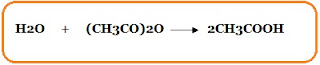
It is a type of non-aqueous titration in which water is removed by the reaction with the acetic anhydride.
preparation and standardization of perchloric acid

The endpoint of reaction is determined by titrating a known amount of potassium hydrogen phthalate with perchloric acid in glacial acetic acid, in which crystal violet solution is used as an indicator.

The molecular weight of perchloric acid (HClO4) is 100.46 g/mol.

Preparation of crystal violet indicator solution:

Take 54 mg of crystal violet and dissolve in 50 ml of anhydrous glacial acetic acid in a volumetric flask, and properly mixing it. Once it has completely dissolved, make up the volume to 100 ml.

Preparation of 0.1 M perchloric acid:

Take 08.50 ml of perchloric acid using a pipette in a volumetric flask, mix with 500 ml anhydrous glacial acetic acid and 25.00 ml of acetic anhydride. Allow to cool at room temperature and make up the volume to 1000 ml with anhydrous glacial acetic acid.

Let allows the mixture to stand for one day and determining the water content. If it exceeds 0.5 percent, add extra acetic anhydride and let it stand again. The amount of water in the solution must be between 0.2 and 0.5 %.

Titration procedure:

  • All glassware should be cleaned and dried according to standard laboratory procedures.
  • Before filling the burette for the titration, rinse it with distilled water and then pre-rinse it with a portion of the titrant solution. Pre-rinsing is required to make sure that all solution in the burette is the desired solution, not a contaminated or diluted solution.
  • Note: Since it is a non-aqueous titration, it needs to be extra careful during the cleaning and drying of glassware. Glassware is required to be clean with acetone and dried for purpose.
  • Take the unknown stock solution of titrant in a clean and dry beaker then fill the burette using the funnel.
  • Remove air bubbles from the burette and adjust the reading to zero.
  • Take 0.35 gm of previously heated (120°C for 2 hours) KHP and pour it into a conical flask.
  • Add 50.00 ml anhydrous glacial acetic acid.
  • Then add 2 drops of crystal violet indicator solution
  • Titrate the sample solution with the perchloric acid solution until the endpoint is reached.
  • The actual endpoint of the titration is indicated by a change of violet color to emerald green.
  • To get accurate results, repeat the titration three times.
  • Properly record the readings of the burette.
  • Take their mean and calculate the molarity of a perchloric acid solution.
  • For the blank determination, repeat the titration as directed above but without the potassium hydrogen phthalate (B).

Observation table:

A.     For titration of sample

Sr. No.

Content in conical flask

Burette reading

Volume of titrant used (ml)

Initial

Final

1


2


3


Mean:


 B.     For titration of blank

Sr. No.

Content in conical flask

Burette reading

Volume of titrant used (ml)

Initial

Final

1


Calculations:

Molarity of perchloric acid = W x RM / V x E
Where,
W is a weight of KHP
E is an equivalent factor of KHP
RM is a required molarity
V is the volume of perchloric acid solution used
V= A-B
A is the volume of perchloric acid solution used in titration with KHP
B is the volume of perchloric acid solution used in titration without KHP
For 0.1 M perchloric acid solution, the equivalent factor of PHP is 0.020422.

Result:

The strength of the prepared perchloric acid solution was found to be_____M.


Commonly asked questions on titration are as follows.

Which indicator is used in the standardization of perchloric acid solution?
Crystal violet is used as an indicator in the standardization of perchloric acid solution which produces emerald green at the endpoint or equivalence point.

Why do we standardize perchloric acid solution?
Standardization of a prepared perchloric acid solution is performed to determine its exact molarity.

What type of titration is the standardization of perchloric acid?
Standardization of perchloric acid is a type of non-aqueous titration.